



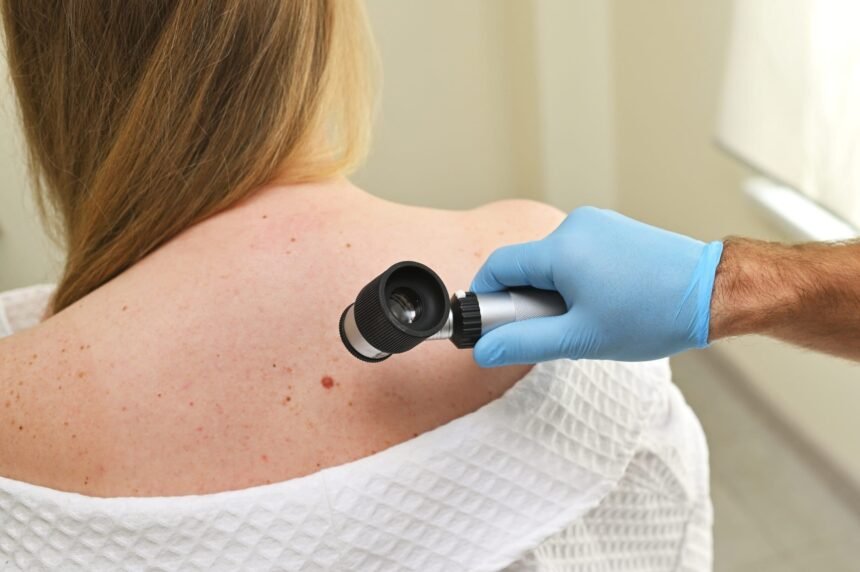
A skin cancer screening is a significant part of protecting your long-term skin health, especially if you have noticed new or changing spots, moles, or lesions. Knowing what information to bring, what to avoid before your visit, and which questions to ask can help you get the most from your screening. Here is how to prepare for a skin cancer screening with your dermatologist:
Review Your Skin
A self-check before your visit to a dermatologist helps you identify areas of concern. Stand in front of a full-length mirror, and use a handheld mirror to view your back, scalp, and other hard-to-see areas. Note any moles or marks that have changed in size, color, or shape, and write down where they sit on your body. This record gives your dermatologist a starting point during the exam.
When you review your skin, focus on specific features that tend to draw clinical attention. The following signs are helpful to document before your screening:
- Asymmetry: One half of a mole looks different from the other, a feature clinicians often note.
- Border changes: The edges appear ragged, blurred, or uneven rather than smooth.
- Color variation: A single spot shows more than one shade, such as brown, black, or red.
- Diameter and evolution: A spot grows larger than a pencil eraser, or it changes over time.
These characteristics provide key guidance for early detection and should be monitored closely to facilitate timely medical evaluation.
Gather Health Information
Your personal and family history influences how your dermatologist evaluates your skin. Write down whether close relatives have had skin cancer, and note your own history of sunburns, tanning bed use, or prior skin conditions. This background is fundamental; it provides context that a single visual exam cannot provide.
You should also compile a short medical summary before the appointment. List your current medications, allergies, and any past skin procedures, and keep the notes brief but specific. If you had a mole removed two years ago, record the date and the location.
Understand the Screening
You will change into a gown for the screening. Your dermatologist will examine your skin from your scalp to the soles of your feet. The provider may use a dermatoscope, a handheld magnifying tool with a light, to view areas in greater detail. During the exam, expect attention to the following areas:
- Sun-exposed regions: The face, neck, arms, and hands are inspected frequently because they are exposed to sunlight.
- Hidden areas: The scalp, between the toes, and skin folds are checked; these areas are often overlooked at home.
- Existing moles: Any spot you flagged gets a closer look, and the provider compares it against surrounding skin.
If your dermatologist finds a suspicious area, they may recommend a biopsy and explain the next step before proceeding.
Prepare Questions and Next Steps
A short list of questions helps you get clear answers during your brief appointment. Write down what you want to ask, and keep the questions focused on your specific concerns. You may ask how often you should return, what changes warrant a call, or how to monitor a specific mole at home.
Follow-up steps depend on what your dermatologist observes, and it is helpful to understand them before you leave. If the provider recommends a biopsy, ask when the results will be available and how you will receive them. Keep any paperwork organized, and schedule your next screening before you walk out the door if the office allows it.
Consult a Local Dermatologist Today
Regular skin checks are a fundamental part of maintaining your overall health, helping to detect potential issues early. Preparing questions in advance, knowing what to expect during your visit, and following up on recommendations can help you take an active role in your skin health. Contact a qualified dermatologist in your area to schedule your consultation today.