


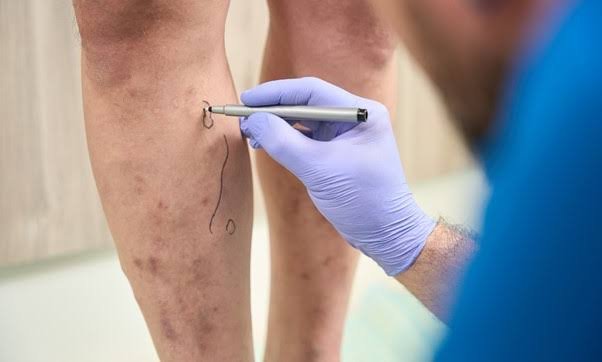
Varicose veins are enlarged, twisted veins that often appear on the legs, and they form when tiny valves inside your veins weaken over time. Blood pools instead of flowing back to your heart, and the vein swells. If you leave them untreated, they may lead to problems beyond appearance. Here are some potential long-term effects from this condition:
Open Sores
Open sores are one long-term effect that develops near the ankles. When pressure builds in your veins, the skin breaks down, and painful ulcers form. These wounds heal slowly because blood circulation in the area stays poor. Early attention matters, so watch for skin that looks thin or shiny.
Ulcers typically return once they appear, and they may become infected without care. A small cut near a swollen vein requires close monitoring. Keep the area clean, and contact a provider if healing stalls.
Increased Blood Clot Risk
Blood that pools in a weakened vein moves slowly. Slow blood flow raises your chance of forming a clot near the surface. This condition is called superficial thrombophlebitis, and it causes redness and tenderness. You might feel a firm, warm cord along the vein.
Deeper clots pose a bigger concern for people with varicose veins. Watch for these warning signs:
- Swelling in one leg
- Warming or redness over a vein
- Aching pain that worsens when standing
A clot that travels to your lungs becomes a medical emergency. Seek help quickly if swelling appears alongside chest pain or shortness of breath.
Chronic Venous Insufficiency
Chronic venous insufficiency happens when your vein valves stop working well over the years. Blood struggles to return upward, so it collects in your lower legs. You may notice heaviness, swelling, and cramping after long periods on your feet. These symptoms tend to worsen as the day goes on.
The condition progresses gradually, and daily habits influence how you feel. Simple steps ease pressure on your legs. Try these adjustments:
- Elevate your legs above heart level when resting
- Wear compression stockings during the day
- Take short walks to keep blood moving
Left unmanaged, this insufficiency contributes to skin changes and ulcers. A vein specialist reviews your symptoms and maps out a treatment path. Regular checkups help you track any progression early.
Discolored Skin
Skin discoloration signals that varicose veins have affected the surrounding tissue. Blood cells break down and leak, so the skin near your ankles turns brown or reddish. This staining is called hyperpigmentation, and it tends to spread with time. The texture may also feel hardened or leathery.
You might notice itching or dryness before the color deepens. Moisturizing helps, but it will not reverse the underlying cause. Address the source and speak with a professional about the vein itself.
Get Treated for Varicose Veins
Varicose veins rarely stay the same and typically progress without care; several treatment options exist, ranging from lifestyle changes to minimally invasive procedures. A qualified provider examines your veins and explains which approach fits your situation. Schedule a consultation with our team to discuss your options today. Medical staff will review your concerns and build a plan around your goals. Reach out by phone or book online, and take the next step toward healthier legs.