


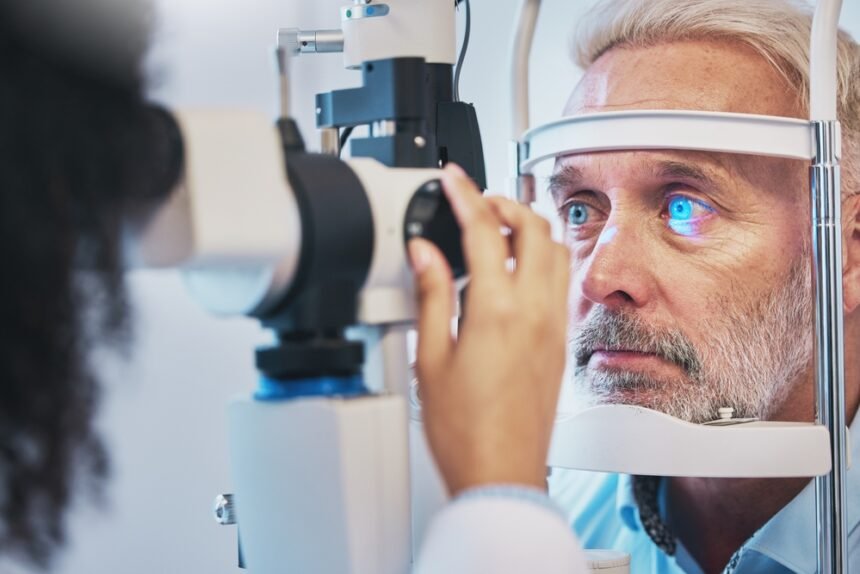
Vision correction procedures address refractive conditions by changing how light focuses inside the eye. Correcting astigmatism requires reshaping the cornea or replacing the eye’s natural lens so that a single focus point is restored on the retina, improving vision. Laser eye surgery is one of several approaches used to correct astigmatism, and treatment planning depends on factors such as prescription characteristics and eye anatomy. Here are some things to know about laser eye surgery for astigmatism:
What Is Astigmatism
Astigmatism occurs when the cornea has an irregular shape instead of a round, circular shape. This irregular curvature creates multiple focus points of light on the retina, and it reduces clarity of vision. The result is vision that appears blurred or distorted at all distances, whether looking at nearby objects or things far away.
Unlike myopia (nearsightedness), which occurs when the eyeball is too long, or farsightedness, which results from a different focusing error, astigmatism develops because the cornea has an irregular shape. Laser eye surgery can correct astigmatism by reshaping the irregular cornea. When a patient has both astigmatism and myopia, treatment can correct both conditions in a single procedure.
How LASIK Corrects Astigmatism
LASIK (laser-assisted in situ keratomileusis) is the most common type of laser vision correction for astigmatism. A laser reshapes the cornea to adjust the eye’s focusing ability and correct irregular curvature. The procedure begins when a precision computer-guided laser creates a protective flap on the cornea. The surgeon then opens the flap to expose the front portion of the cornea for treatment. Laser permanently alters the shape of the cornea, and this change in shape affects the curvature that causes astigmatism. Once the treatment is complete, the flap returns to its original position and heals on its own.
Who Qualifies for Laser Surgery
Laser eye surgery effectively treats astigmatism. An evaluation identifies whether LASIK or another vision correction procedure is more appropriate. Higher levels of astigmatism often require a different vision correction approach, and implantable lens procedures are frequently used instead.
LASIK and PRK (photorefractive keratectomy) are generally not suitable for extreme levels of myopia and astigmatism, and implantable lens procedures are often used for these cases. Visian Toric ICL (implantable collamer lens) corrects vision for patients with moderate to high levels of myopia and astigmatism. Because the lens is placed inside the eye, it corrects vision without reshaping the cornea.
EVO ICL provides another option for patients with high prescription ranges. PRK may be suitable for patients with higher prescriptions and those who have thinner corneas instead of LASIK. Since procedure suitability varies among patients, a consultation helps to determine the most appropriate treatment.
What to Expect During Surgery
Before the procedure begins, patients should discuss any questions about treatment and recovery. Eye drops are used to numb the eyes, and patients remain awake throughout the procedure. The surgeon explains each step as treatment progresses because communication is part of the procedure experience. Sleeping after the procedure is recommended because the eyes are generally most comfortable when they remain closed during the initial recovery period.
Schedule for Laser Eye Surgery
Professional eye surgery uses advanced technology to permanently reshape the cornea, and this change corrects refractive errors by improving the eye’s focusing ability. Qualified eye surgeons use precision computer-guided lasers, which support accurate treatment of the cornea. A consultation identifies appropriate vision correction options for your prescription and eye characteristics. Contact a qualified eye surgeon to schedule a consultation about your vision correction options.